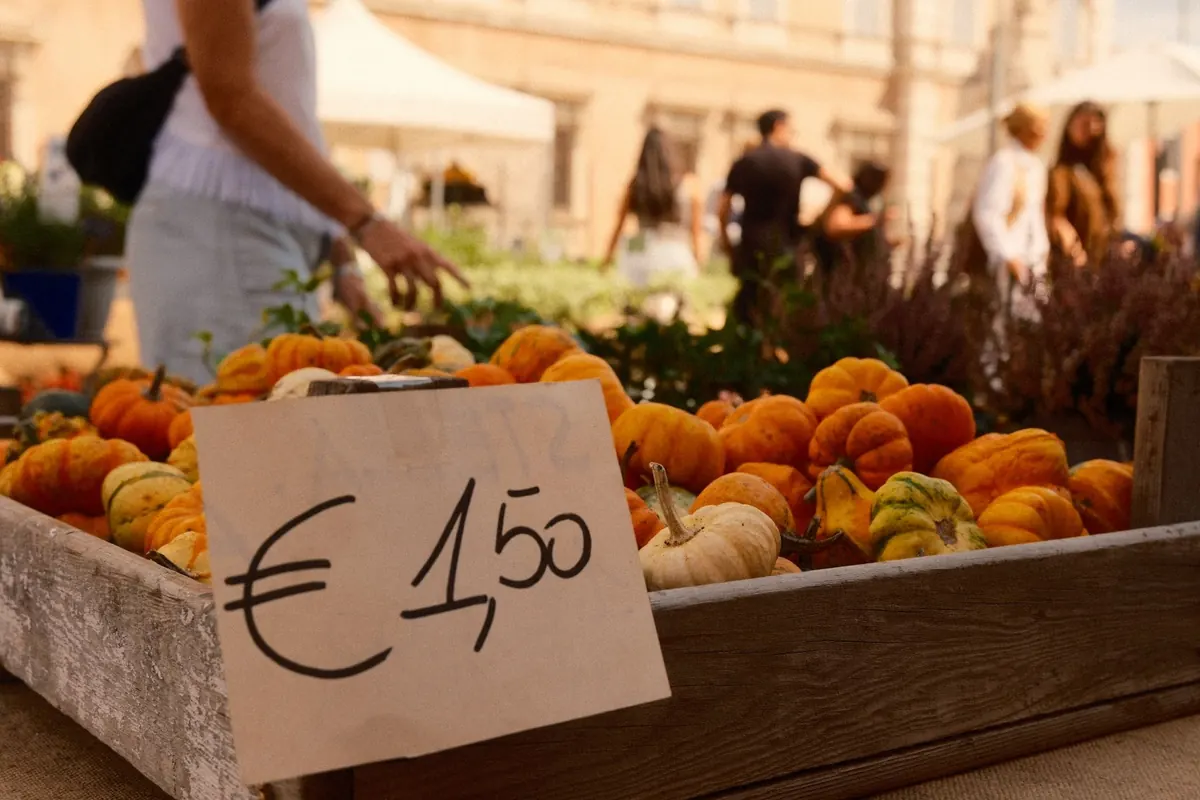
By the middle of September, the tables at a farmers' market have quietly changed. The soft fruit has thinned out, the tomatoes are down to their last few varieties, and in their place come crates of apples, strings of onions, knobbly squashes and the first muddy leeks.
It is, for my money, the best season to shop this way. The choice is generous, the growers have a moment to talk, and most of what you carry home will keep for weeks if you treat it properly. Here is what to look for, how to store it, and what to cook first.
What to buy in autumn
Autumn produce arrives in waves, and the market shifts week by week. Broadly, this is what you are looking for:
- Orchard fruit: apples and pears by the box, quince, damsons and late plums.
- Hedgerow fruit: blackberries, sloes, rosehips and crab apples.
- Roots and alliums: carrots, beetroot, celeriac, parsnips, swede, onions, garlic and leeks. Parsnips improve after the first cold snap.
- Greens: kale, cavolo nero, chard, Savoy cabbage and the last of the runner beans.
- Squashes and pumpkins: crown prince, butternut and onion squash, plus the decorative ones that are better in soup than on a doorstep.
- Mushrooms and game: field mushrooms, girolles, pheasant, partridge, rabbit and venison, depending on where you live.
- Worth a detour: new-season cheese, sourdough, apple juice, cider, honey and cobnuts or hazelnuts.
Early autumn (September to mid-October)
This is the abundance moment. Fill your bags with tomatoes, sweetcorn and courgettes while they last, then add the first apples, blackberries, damsons and squashes. It is the easiest time of year to overbuy, so think about what you can process within a day or two and make jam, chutney or passata with the rest.
Late autumn (late October to November)
The market gets earthier. Roots, brassicas, leeks, celeriac and Jerusalem artichokes take over, alongside stored apples and pears, quince, cobnuts and game. Greens may look a little battered after a wet week. That is normal, and they will taste fine.
How to shop a stall well
Market shopping rewards a bit of nerve and a lot of questions. A few habits make a real difference:
- Arrive early for choice, late for value. The best of everything goes in the first hour; the last hour is when stallholders would rather sell than pack up.
- Ask what is at its peak. "What's best this week?" is the most useful question you can ask, and you will get an honest answer.
- Buy a box, not a bag, if you plan to preserve. Many stalls sell larger quantities or slightly bruised "seconds" for cooking.
- Take your own bags and a little cash. Not every stall takes cards, and a sturdy bag copes better with a heavy squash.
- Walk the whole market once before you buy. You will kick yourself if you find better beetroot three stalls along.
- Chat about storage. Growers know exactly how long their produce keeps.
Storing your haul
Most autumn disappointment comes from bad storage rather than bad shopping. A few rules cover almost everything.
Fruit
Apples and pears keep best in a cool, dark, frost-free place — a shed, garage or unheated room. Lay them in single layers, not touching, in shallow boxes lined with newspaper, and check them weekly, removing any that have gone over. Keep them away from other produce, as ripe fruit gives off a gas that speeds up spoiling in everything nearby. Do not wash berries until you are ready to eat them. Sloes and damsons can go straight into the freezer, which also helps their skins split when you make gin or jam.
Roots, squashes and alliums
Onions and garlic want dry air and good ventilation: plait them or hang them in nets. Squashes last far longer if you cure them first — leave them somewhere warm and dry for a week or so until the skin hardens, then store them cool and off the floor. Roots can go into a box of barely damp sand in a cool shed, where they will keep for months. If you have no cool storage, cook and freeze instead.
Greens, herbs and mushrooms
Leafy greens do best wrapped in a clean tea towel or paper bag in the fridge drawer. Hardy herbs such as rosemary, thyme and sage freeze well on the stalk. Wild mushrooms are the exception to almost every rule: brush them clean rather than soaking them, and cook them within a day or two. If you are not confident identifying mushrooms yourself, buy from a stall that can tell you exactly what you are getting.
Easy meals from an autumn bag
- Squash and sage risotto. Roast cubed squash first, then stir it through a plain risotto at the end with fried sage leaves and plenty of cheese.
- Roasted roots with honey and thyme. Carrots, parsnips and beetroot in a hot oven, finished with a spoon of honey and a splash of vinegar. Keep beetroot in its own tin if you mind the bleeding.
- Leek and potato soup. Soften sliced leeks in butter, add potatoes and stock, simmer, then blend. It freezes well.
- Celeriac remoulade. Julienne raw celeriac, salt it briefly, then dress with mayonnaise, mustard, lemon and parsley. Sharp, cheap and excellent with cold meat.
- Game casserole. Brown pheasant or rabbit pieces, add bacon, onions, stock and a little cider, and cook slowly until it falls apart.
- Mushrooms on toast. Fry hard in a hot pan with butter, garlic and thyme, and do not crowd them.
If you end up with more fruit than you can eat, chutney and apple butter are forgiving: they will take bruised fruit, odd sizes and a mix of varieties. On preserving, follow tested recipes for anything you intend to bottle and keep, and if you are pregnant, elderly or otherwise vulnerable, take advice before eating home-preserved or foraged food.
Before you go next week
Take a list, but treat it as a suggestion. Autumn markets are led by the weather, so the stall with perfect plums last Saturday may have nothing this week. Buy what looks best, ask what to do with it, and plan the week's meals around your bag rather than the other way round. Keep a shelf in the shed for apples, a box of sand for roots, and a few empty jars for the fruit you cannot get through. Do that, and a Saturday morning at the market will feed you well into the grey months.
Photo: Maciek Dostatni / Pexels